Looking for a suburb that feels connected, convenient, and easy to settle into? Mission, Kansas, stands out because daily life here tends to be simple in a good way. If you are thinking about moving to Mission or just want a realistic picture of what living there feels like, this guide will walk you through errands, commuting, recreation, and the overall rhythm of the city. Let’s dive in.
Mission Feels Compact and Convenient
Mission is a small, first-tier suburban city in northeast Johnson County that covers about 2.87 square miles and has a population of roughly 10,013. It is also nearly fully developed, which shapes how everyday life works. Instead of a spread-out suburb with long drives between places, Mission tends to feel more compact and established.
Because the city is landlocked and built out, daily routines often revolve around a few key corridors. That can make life feel more predictable and efficient, especially if you like knowing where your go-to grocery stop, coffee run, or dinner option will be.
The city also describes itself as having a small-town feel, and that idea shows up in everyday living. You get access to the larger Kansas City metro, but the local setup still feels grounded in a defined community.
Johnson Drive Shapes Daily Life
If you live in Mission, Johnson Drive will likely become part of your regular routine. The city identifies it as the main everyday corridor and says it has long served as the retail trade area for northeast Johnson County. In practical terms, that means a lot of the places you need are concentrated in one familiar part of town.
Along and near Johnson Drive, you will find local and national retailers, boutique shops, and a range of dining and drinking establishments. The city also notes that Mission has both a full-service grocery store and a national big-box retailer. For many residents, that means a large share of weekly errands can stay close to home.
That convenience matters in day-to-day life. Instead of planning trips across several suburbs for basic needs, you may be able to keep grocery runs, household shopping, and casual dining within a relatively tight area.
Local Services Are Close at Hand
Mission’s business directory shows a broad service base for a city its size. It lists 203 service businesses, 55 retail businesses, and 54 food-and-drink businesses. That mix supports a routine that can feel more self-contained than in some newer edge-of-metro suburbs.
That does not mean every part of Mission is walkable to every destination. Still, the concentration of businesses suggests you can often stay local for everyday needs. For buyers who value convenience over sprawl, that can be a strong plus.
Newer multifamily and mixed-use projects are also clustering near Johnson Drive, Martway, and Nall. The city says some of these projects are near the downtown commercial corridor and close to shops and restaurants, which adds to the connected feel in those areas.
Getting Around Mission and Beyond
One of Mission’s biggest practical advantages is location. The city sits beside Interstate 35, and nearby major corridors include Metcalf Avenue/US-69 and Shawnee Mission Parkway. For drivers, that usually means straightforward access to Johnson County and the broader Kansas City metro, depending on traffic.
If your work, appointments, or social plans take you outside Mission often, that metro access can make a real difference. You get the benefit of living in a smaller city without feeling cut off from larger employment, shopping, and entertainment areas.
Transit is also a real option here. RideKC lists the Mission Transit Center at 5251 Johnson Drive, with routes 401, 402, and 403 serving the area. If you prefer to mix driving with transit or want another commuting option, that is part of Mission’s day-to-day convenience.
Walking and Biking Are Part of the Mix
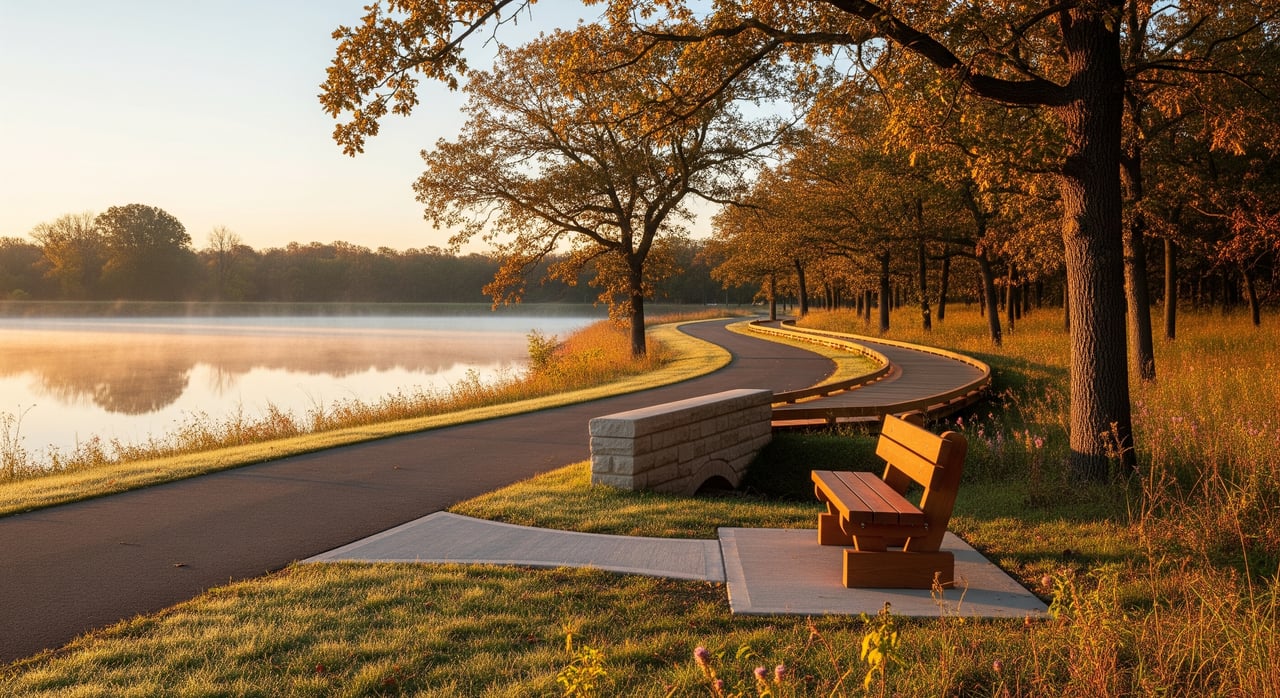
Mission leans more into walking and biking than many first-ring suburbs. The city says its parks include more than five miles of walking trails, and the Rock Creek Trail is a 1.65-mile shared-use path that crosses the city from east to west. That gives residents another way to move through the city for exercise or short local trips.
The city also notes bike lanes and sharrows on Lamar, a trail on Nall, and a bike-maintenance station at Johnson Drive and Reeds Road. Those details may seem small, but they help support a more connected routine.
Mission has also adopted a citywide bicycle and pedestrian plan, along with corridor design guidelines for Johnson Drive. That planning framework supports the idea that some parts of Mission may feel more pedestrian-oriented than a typical auto-focused suburb.
Recreation Fits Into Weekly Routines
For many residents, the Powell Community Center is a regular part of life in Mission. The city says the center includes an indoor track and pool, cardio equipment, aerobics and spin rooms, gymnasiums, racquetball and pickleball courts, personal training, group fitness, and event spaces.
That kind of facility can make a big difference in your routine. Instead of driving to multiple places for workouts, sports, or recreation, you have a central local option with a wide range of amenities.
Mission also has parks, reservable shelters, and recreation programming that help create a steady weekly rhythm. If you like living somewhere with visible community activity, Mission offers that in a practical and approachable way.
Summer Has Its Own Energy
Summer in Mission tends to bring even more community activity. The Mission Family Aquatic Center includes water slides, diving boards, lap lanes, and a sprayground, giving residents a seasonal option for both recreation and exercise.
Mission Market is another important part of the local rhythm. The city describes it as a Thursday evening market with local produce, makers, food trucks, live music, and a beer and wine garden. For the 2026 season, it is temporarily moving to Broadmoor Park because of construction at the Johnson Drive site.
Events like these can shape what a place feels like on a normal week. In Mission, that can mean summer evenings that feel active, local, and easy to join without a lot of planning.
What Buyers Should Know Right Now
If you are thinking about buying in Mission, it helps to understand that the city is not standing still. The Johnson Drive project page says utility relocations are ongoing, and construction on the Metcalf-to-Lamar corridor is anticipated to start in early 2026. The project is intended to improve connectivity, pedestrian safety, drainage, sidewalks, and streetscape elements.
The city also shows 2026 residential street reconstruction and other public works activity. For buyers, that means Mission is in an active period of reinvestment and infrastructure work.
That can bring short-term inconvenience in some areas, but it also reflects ongoing attention to how the city functions. In a compact, established suburb, that kind of reinvestment is often part of keeping everyday life workable and connected.
Who Mission May Appeal To Most
Mission can be a strong fit if you want a convenience-first suburban lifestyle with quick metro access. It may especially appeal to people who value a real central corridor, local services close by, and recreation that is easy to work into a busy week.
It may also appeal to buyers who prefer an established city over a brand-new, spread-out suburban pattern. Mission is compact, active, and shaped by reinvestment rather than outward expansion.
The tradeoff is that a city this built out will not feel the same as a newer suburb with larger growth areas and more separation between residential and commercial zones. In Mission, daily life tends to feel closer in, more connected, and more tied to a few well-used community spaces.
The Bottom Line on Daily Life in Mission
Living in Mission day to day is less about big, flashy amenities and more about ease. You have a defined local corridor, a strong base of everyday services, access to transit and major roads, and a visible parks and recreation presence that helps give the city its rhythm.
For many buyers, that combination is exactly the appeal. Mission offers a small-city feel with practical access to the rest of the metro, and that balance can make everyday life feel both manageable and connected.
If you are exploring homes in Mission or comparing Johnson County communities, working with a team that knows how each area functions day to day can help you make a more confident move. The Huff Group can help you evaluate whether Mission fits your lifestyle, commute, and long-term goals.
FAQs
What is daily life like in Mission, KS?
- Daily life in Mission often centers on convenience, with many errands, dining options, and services clustered around Johnson Drive and nearby corridors.
Is Mission, KS easy to get around from?
- Yes. Mission is next to Interstate 35, near Metcalf Avenue/US-69 and Shawnee Mission Parkway, and also has the Mission Transit Center with RideKC routes 401, 402, and 403.
Does Mission, KS have walkable areas?
- Some parts of Mission feel more connected for walking and biking than a typical auto-focused suburb, supported by trails, bike lanes, sharrows, and pedestrian planning.
What amenities does Mission, KS offer for recreation?
- Mission offers the Powell Community Center, walking trails, parks, reservable shelters, the Mission Family Aquatic Center, and seasonal community programming like Mission Market.
Is Mission, KS a good fit for buyers who want convenience?
- Mission may appeal to buyers who want a compact suburban setting with close-by services, a central commercial corridor, and easy access to the larger Kansas City metro.